Loading...
Loading...
Loading...
Loading...
Loading...
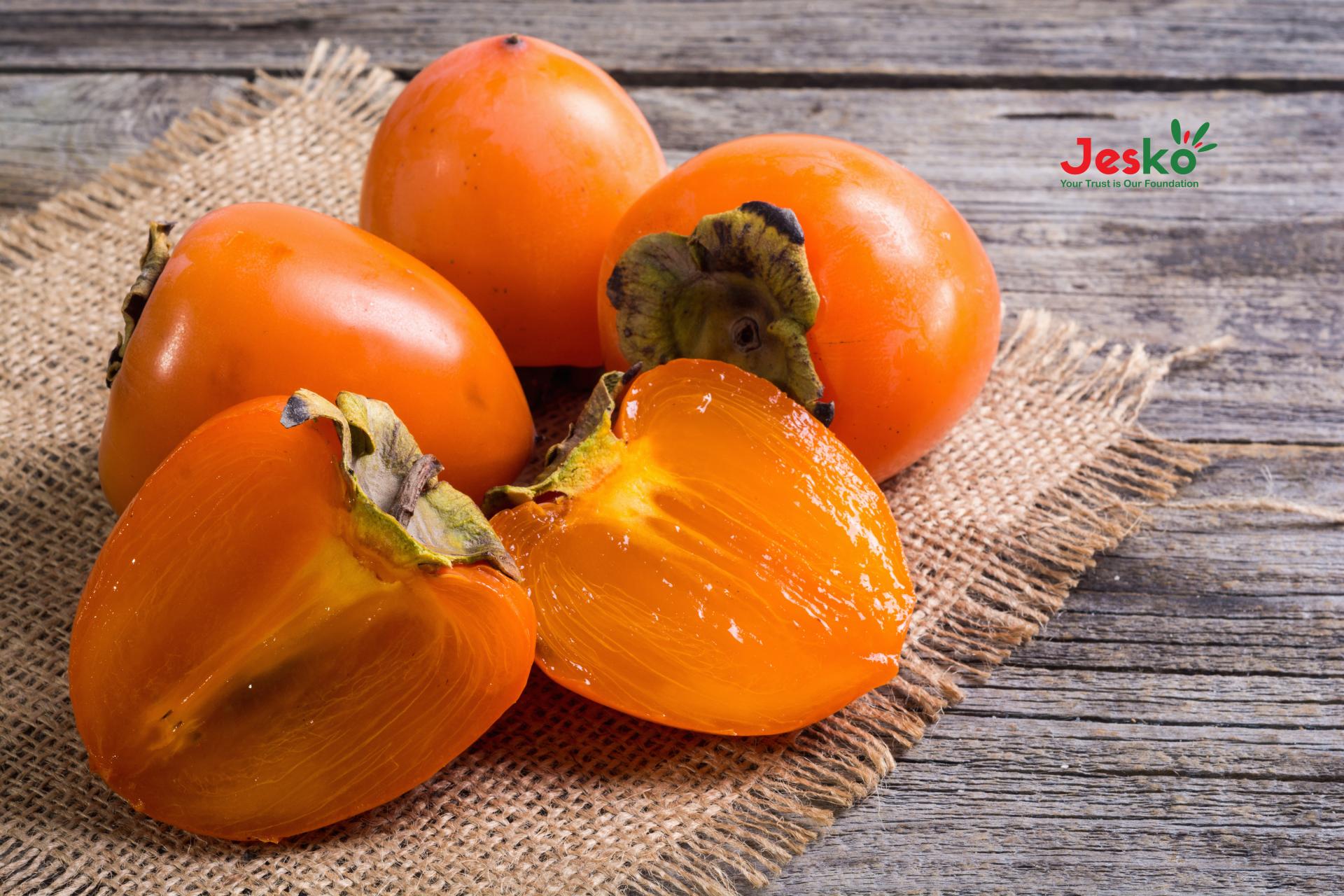
Persimmon (Diospyros kaki)
There are fruits that taste like sunlight in summer, bright, playful, fleeting.
And then there is persimmon, the fruit of autumn.
Soft as evening light, warm against the growing chill.
A quiet sweetness that lingers, not loud, but deep.
When the air cools and the leaves begin their amber descent, persimmon arrives.
Not to dazzle, but to comfort. It ripens slowly, just as we learn to slow, too.
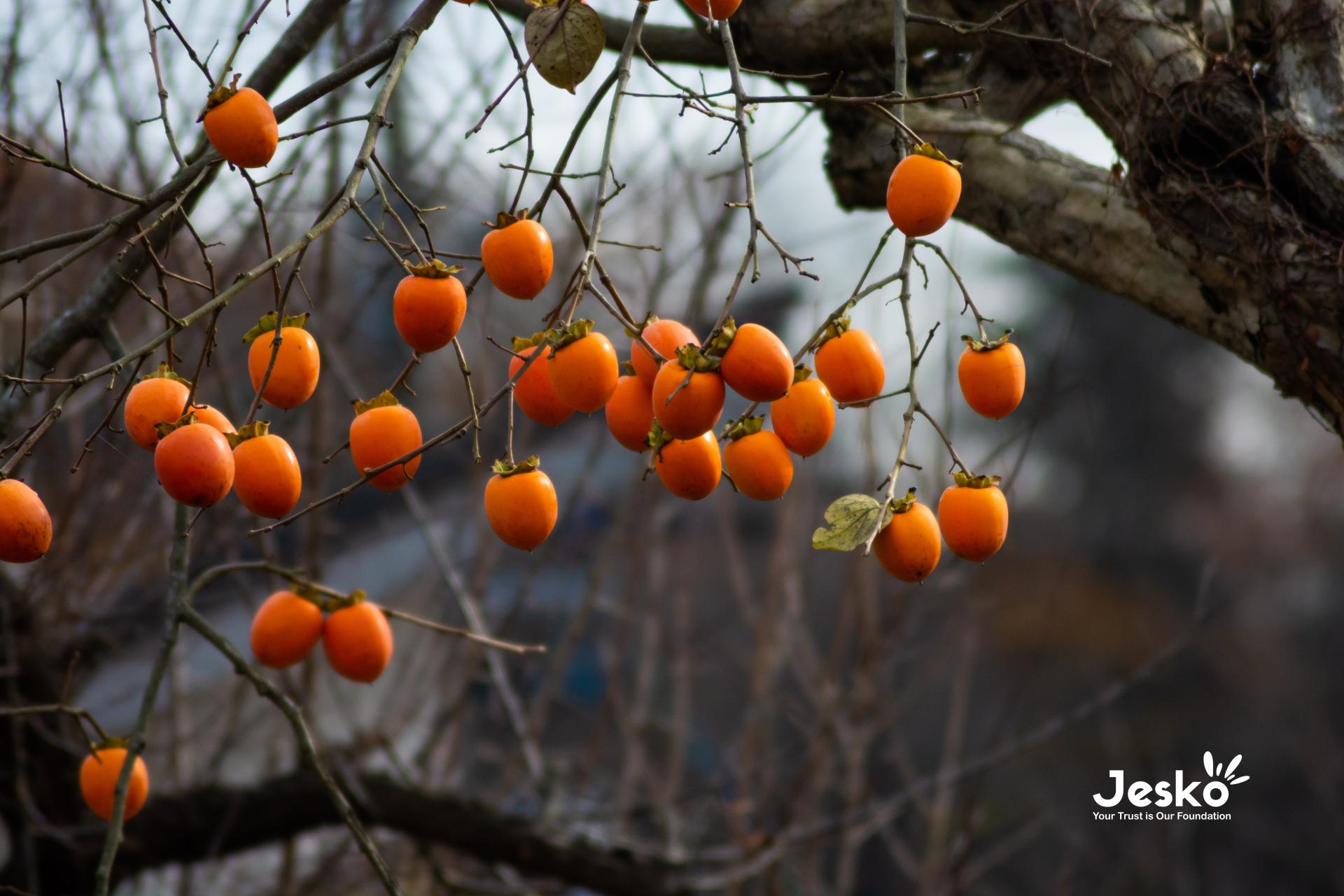
Persimmon Fruit (Diospyros kaki) - Botanical Overview
Persimmon fruit is primarily derived from Diospyros kaki, widely cultivated throughout East Asia [1].
Astringent cultivars contain significantly higher proanthocyanidin tannins, which define both their initial astringency and strong antioxidant activity [1].
Nutrition Facts (USDA, per 100 g raw fruit)
Component | Amount |
Calories | 70 kcal |
Carbohydrates | 18.6 g |
Sugars | 12.5 g |
Dietary Fiber | 3.6 g |
Protein | 0.58 g |
Fat | 0.19 g |
Vitamin C | 7.5 mg |
Potassium | 161 mg |
Source: USDA FoodData Central (2024) [6].
Antioxidant Activity
Persimmon contains high–molecular-weight proanthocyanidins, which may exhibit up to 20× the antioxidant capacity of vitamin C and 50× that of vitamin E [1].
These antioxidants are most concentrated in the peel, astringent cultivars, and early-stage unripe fruit [1].
Health & Medicinal Benefits
Function | Physiological Effect | Mechanism | Reference |
Cardiovascular support | Supports vascular relaxation | Polyphenols reduce oxidative stress | [1] |
Lipid regulation | Lowers total cholesterol, LDL, triglycerides | Tannins modulate lipid metabolism | [4] |
Blood glucose control | Slows post-meal sugar elevation | Inhibits α-amylase & α-glucosidase | [5] |
Anti-cancer potential | Chemoprotective antioxidant response | Catechins influence cell signaling pathways | [7] |
Reducing Intoxication
Persimmon has traditionally been used to reduce alcohol absorption and lower acetaldehyde, the key compound responsible for hangover symptoms [1].
This effect is linked to tannin-mediated modulation of alcohol metabolism [1].
Summary — Persimmon Fruit
Persimmon Varieties — Key Differences
Cultivar | Type | Tannin Level | Flavor & Texture | Notes |
Hachiya | Astringent | High | Soft and jelly-like when ripe | Must be fully soft to eat [3] |
Fuyu | Non-astringent | Low | Crisp like apple | Can be eaten firm [1] |
Rojo Brillante | Astringent (often deastringed) | High | Smooth, sweet | High reported antioxidant capacity [3] |
Matsumoto-Wase-Fuyu | Non-astringent | Low | Sweeter Fuyu variant | Early-season variety [3] |
Hiratanenashi | Astringent | High | Rich, tannin-forward | Traditionally used for drying and processing [3] |
Persimmon Leaf
Traditional Use
Persimmon leaves are traditionally dried and brewed into caffeine-free tea associated with circulatory balance and skin clarity [2].
Composition
The leaves contain quercetin, kaempferol, astragalin, proanthocyanidins, terpenoids, vitamin C, and polysaccharides, contributing to antioxidant and metabolic benefits [2].
Core Pharmacological Effects
Effect | Functional Outcome | Key Actives | Reference |
Anti-inflammatory | Modulates oxidative stress | Flavonoids | [2] |
Cardiovascular support | Promotes vascular relaxation | Prodelphinidins | [2] |
Skin & anti-aging support | Inhibits melanin formation | Anti-tyrosinase flavonoids | [2] |
Neuroprotection | Supports neuronal resilience | Quercetin derivatives | [2] |
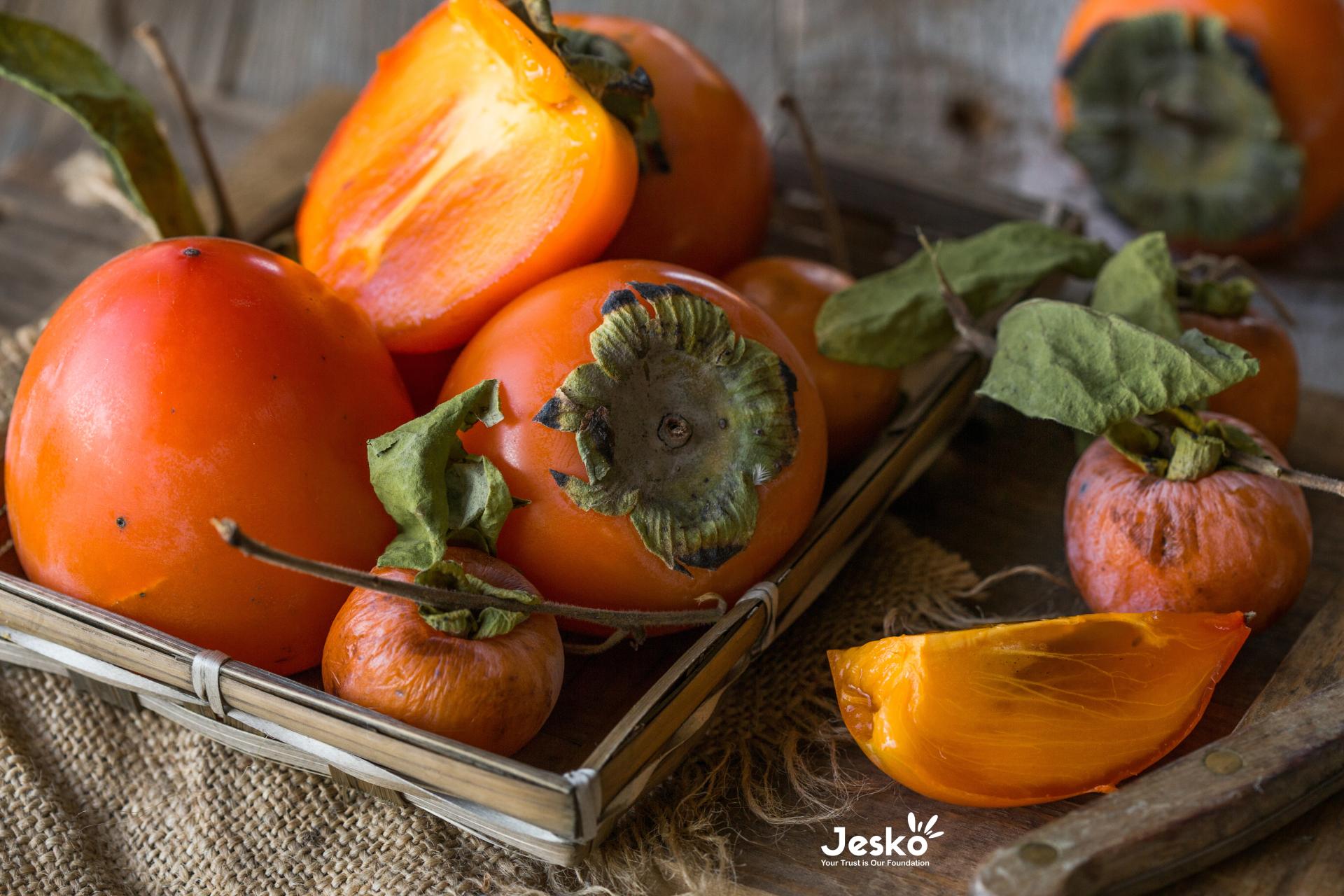
Persimmon fruit, a gentle sweetness of autumn
Seasonal Influence & Bioavailability
Antioxidant concentration is highest in late spring to early summer, and hot-water extraction increases flavonoid absorption [2].
Combined Benefits Summary
Plant Part | Key Bioactives | Primary Outcomes |
Fruit | Proanthocyanidins, carotenoids, vitamin C | Antioxidant support; lipid & glucose homeostasis; metabolic comfort |
Leaf | Flavonoids, terpenoids, polysaccharides | Cardiovascular support; anti-inflammatory tone; neuroprotection |
The season softens here.
From fruit to leaf, persimmon carries the quiet warmth of autumn made gentle, grounding, unhurried.
What ripens slowly nourishes deeply.
Jesko — Your Trust is Our Foundation.
REFERENCES
[1] George, A. P., & Redpath, S. (2008). Health and medicinal benefits of persimmon fruit: A review. Advances in Horticultural Science, 22(4), 244–249.
[2] Hossain, A., & Shahidi, F. (2023). Persimmon Leaves: Nutritional, Pharmaceutical, and Industrial Potential. Plants, 12(937), 1–28.
[3] EXCLI Journal. (2015). Phytochemistry and health functional attributes of persimmon (Diospyros kaki). EXCLI Journal, 14, 142–161.
[4] Gorinstein, S., et al. (2001). Comparative content of dietary fiber, total phenolics, and minerals in persimmons and apples. Journal of Agricultural and Food Chemistry.
[5] Lee, J. S., et al. (2007). Proanthocyanidins from persimmon peel inhibit α-amylase and α-glucosidase. Journal of Nutritional Biochemistry.
[6] USDA FoodData Central (2024). Persimmon, raw.
[7] Katsube, T., et al. (2004). Induction of apoptosis in cancer cells by persimmon extract. Food Chemistry.