Loading...
Loading...
Loading...
Loading...

Loading...
Jesko Lychee - Red skin of sunlight, cool flesh of early summer sweetness.
Lychee (Litchi chinensis Sonn.), belonging to the Sapindaceae family, is a fruit valued for its fragrance, sweetness, and translucent aril texture. Widely consumed in both fresh and processed forms, lychee is used to produce juices, wines, honey, vinegars, candies, preserved pulp, and premium dessert preparations [1].
The lychee originated in Southern China and Northern Vietnam, with cultivation documented for over three millennia[1]. In imperial China, the lychee was considered a luxury tribute fruit, cherished in poetry, court exchange, and seasonal celebration.
Over time, trade routes carried the lychee to: Southeast Asia, India, Africa, Australia, The Americas
Yet the cultural meaning of the lychee remains tied to its ancestral landscapes:
summer, festivity, abundance, and warmth.
Ecology & Growth Conditions
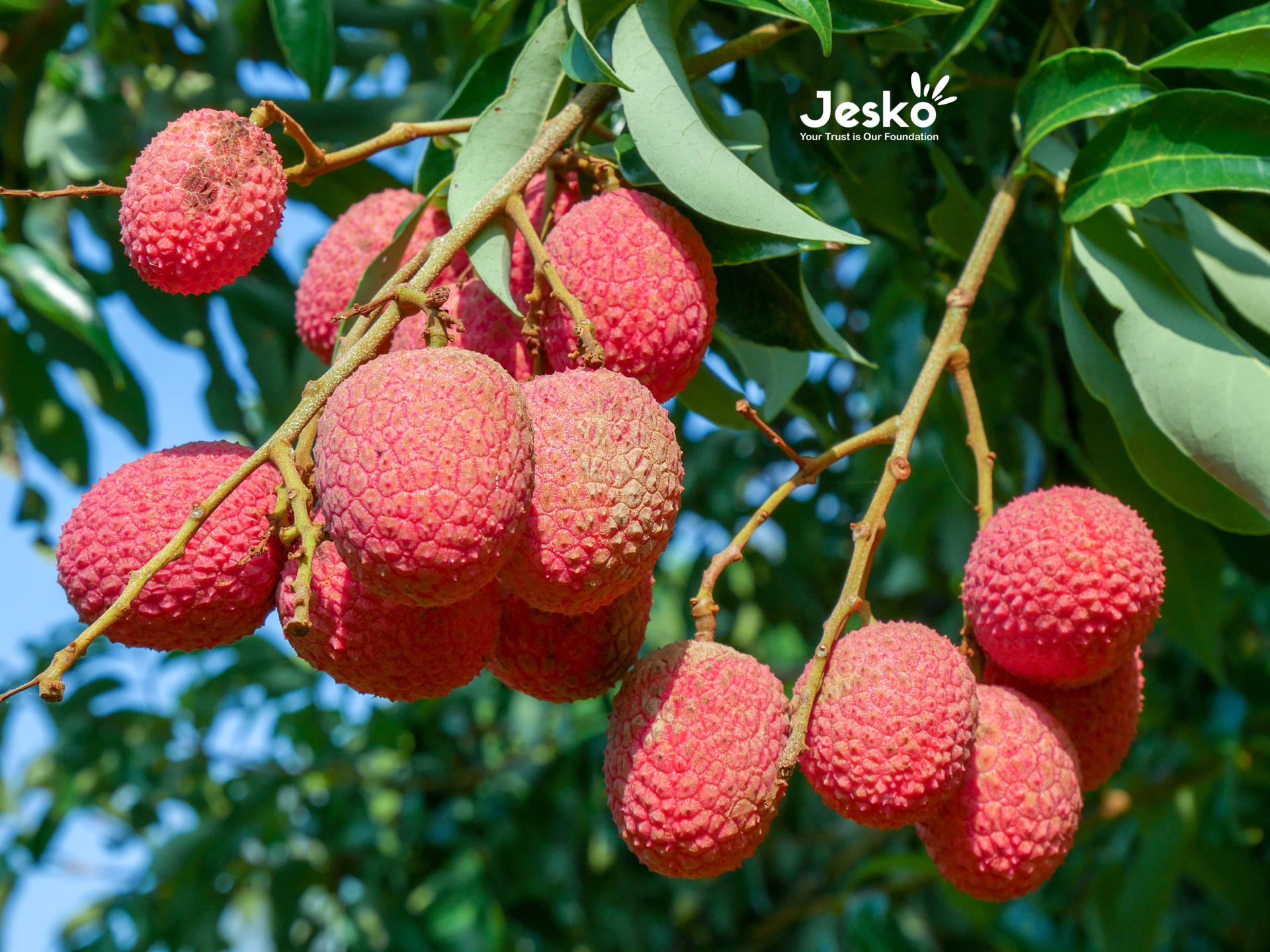
Lychee is a medium-sized evergreen tree (10–15 m) with a rounded canopy and leathery leaves. Its growth and flowering cycles depend strongly on climate rhythms[1].
Environmental Requirements
Factor | Optimal Condition | Importance |
Temperature | 25–30°C for fruit development | Flavor and sugar accumulation |
Cool period | 5–14°C during floral induction | Flower bud formation |
Humidity | High (≥70%) | Prevents pericarp cracking |
Soil | Deep, well-drained, organic-rich loam | Supports root and nutrient balance |
Seasonal Sensitivity
Lychee is highly sensitive to:
Its successful harvest, therefore, reflects environmental harmony and careful cultivation timing.
Nutrition Facts – Raw Lychee (per 100 g) [2].
Source: USDA FoodData Central (FDC ID 169086)
Nutrient | Amount |
Energy | 66 kcal |
Protein | 0.83 g |
Total lipid (fat) | 0.44 g |
– Saturated fat | 0.10 g |
Carbohydrate, by difference | 16.53 g |
Dietary fiber | 1.3 g |
Sugars, total including NLEA | 15.23 g |
Calcium, Ca | 5 mg |
Iron, Fe | 0.31 mg |
Magnesium, Mg | 10 mg |
Phosphorus, P | 31 mg |
Potassium, K | 171 mg |
Sodium, Na | 1 mg |
Vitamin C, total ascorbic acid | 71.5 mg |
Thiamin (Vitamin B1) | 0.011 mg |
Riboflavin (Vitamin B2) | 0.030 mg |
Niacin (Vitamin B3) | 0.689 mg |
Vitamin B6 | 0.100 mg |
Folate, total | 14 µg |
Vitamin A, RAE | 0 µg |
Vitamin E (alpha-tocopherol) | 0.07 mg |
Vitamin K (phylloquinone) | 0.1 µg |
Copper, Cu | 0.134 mg |
Manganese, Mn | 0.075 mg |
Selenium, Se | 0.1 µg |
Lychee pulp is mostly water, natural sugars, and nutrients essential to metabolic health [1].
Per 190 g edible portion:
This composition makes lychee hydrating, replenishing, and restorative, especially during warm seasons.
Health Benefits
Lychee is recognized for diverse bioactive compounds, especially polyphenols, flavonoids, anthocyanins, and proanthocyanidins, known for anti-inflammatory and antioxidant properties [1].
Key Functional Benefits
Benefit | Biological Mechanism |
Antioxidant Protection | Neutralizes free radicals and protects cell membranes |
Anti-inflammatory Response | Downregulates pro-inflammatory pathways |
Cardiovascular Support | Polyphenols improve blood vessel function |
Metabolic Regulation | Extracts (e.g., Oligonol) enhance fat oxidation and insulin sensitivity |
Digestive & Immune Support | Vitamins and fiber support gut and immunity |
Traditional medicine uses leaves, seeds, and pericarp for relieving heat, aiding digestion, and reducing swelling [1].
Biochemistry & Fruit Color
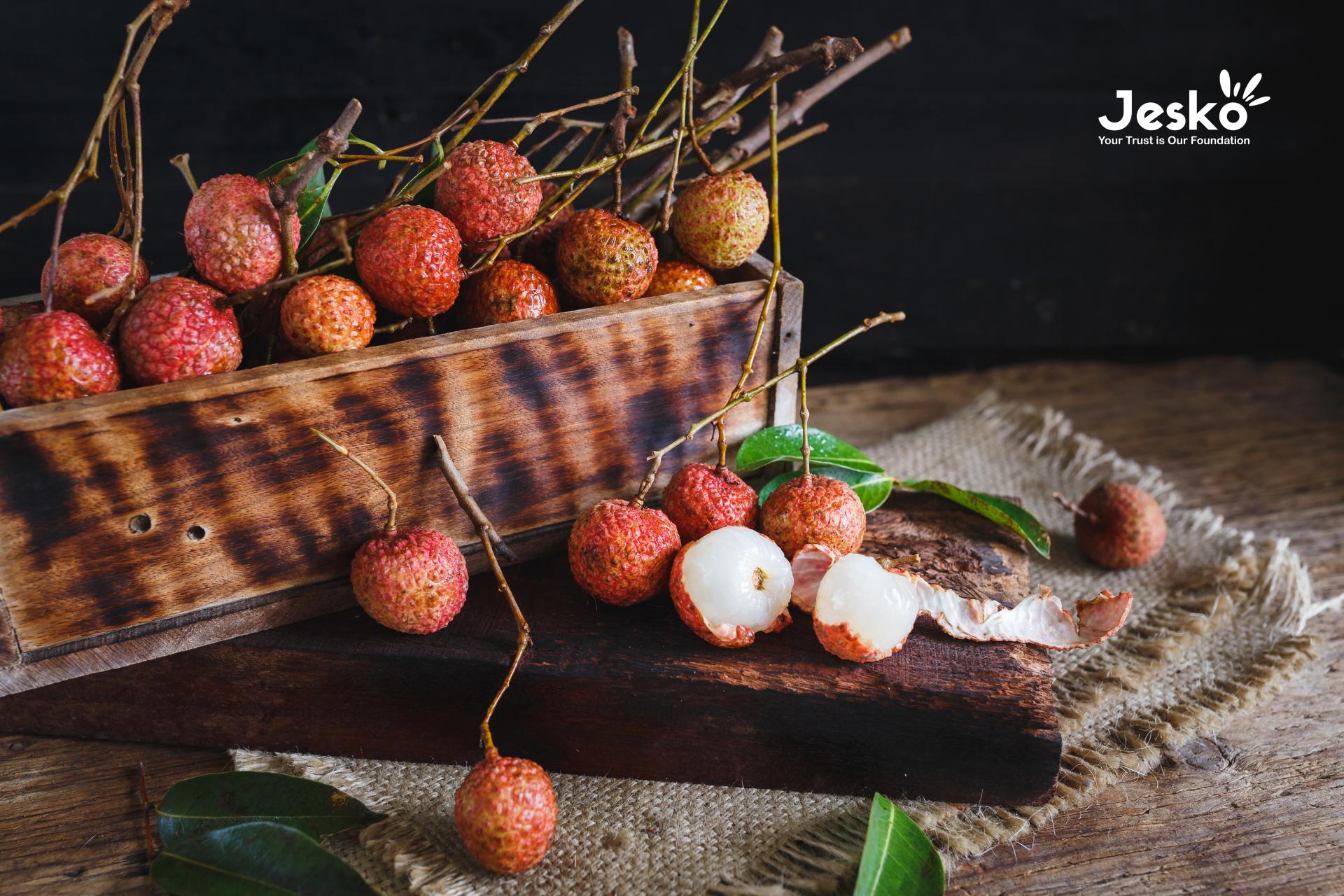
The lychee’s red pericarp comes from anthocyanins, especially cyanidin-3-rutinoside and cyanidin-3-glucoside, synthesized through the phenylpropanoid pathway[1].
However, these pigments are highly sensitive to:
After harvest, browning is caused largely by polyphenol oxidase (PPO) and peroxidase (POD) activity [1].
To preserve color, firmness, and flavor, export-quality lychee requires:
These methods maintain lychee’s natural freshness during long-distance export.
Toxicology & Consumption Considerations
Lychee is safe and nutritious for general consumption.
However:
For healthy individuals eating lychee as part of normal meals, these risks do not apply.
Cultural Warmth
The lychee is a fruit of season and patience.
It grows slowly, ripens only when the season is right, and carries with it the character of soil, sunlight, and human care.
When we share lychee, we share the warmth of the fields and the hands that tended them.
Jesko Lychee protects that story.
From orchard to cool house, from selection to packaging, from ship to market,
we preserve the tenderness, fragrance, and summer sweetness the fruit was born with.
This is not simply trade.
This is connection
between place and people,
between growers and those who receive the fruit.
Jesko Lychee is the taste of summer fields, carried forward with respect.
Grown With Hands, Shared With Heart
Jesko – Your Trust is Our Foundation
References
[1] Anjum, J., Lone, R., & Wani, K. A. (2017). Lychee (Litchi chinensis): Biochemistry, Panacea, and Nutritional Value. In M. Kumar et al. (Eds.), Lychee Disease Management (pp. 237–254). Springer Nature Singapore. https://doi.org/10.1007/978-981-10-4247-8_14
[2] [2] U.S. Department of Agriculture, Agricultural Research Service. (2024). FoodData Central: Lychees, raw (FDC ID: 168168). https://fdc.nal.usda.gov/food/168168