Loading...
Loading...
Loading...
Loading...

Loading...
From Vietnam’s Tropical Orchards to Global Wellness
Jesko supplies premium Guava (Psidium guajava L.) from managed orchards across the Mekong Delta and South-Central coastal regions of Vietnam.
Warm tropical sunlight, balanced irrigation, and mineral-rich alluvial soils shape fruit with natural sweetness, crisp texture, and a bright aromatic profile.
Every shipment is aligned to strict specifications in size, maturity index, color grade, firmness, soluble solids (Brix), packaging, and labeling, ensuring sample-to-shipment consistency under FOB and CIF terms.
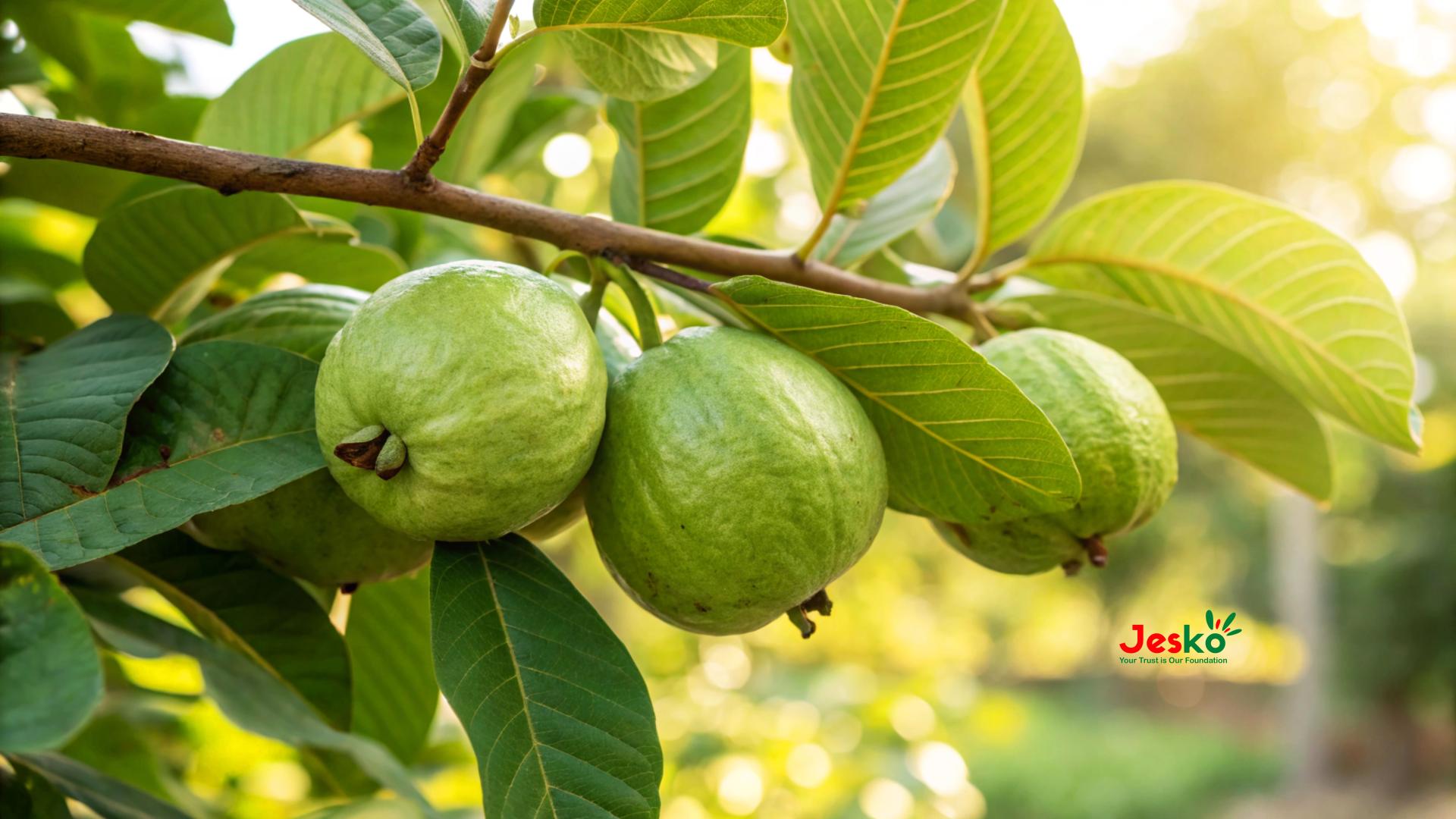
The Fruit of Vitality — Inside Psidium guajava L.
Guava has long been recognized as a nutrient-dense tropical fruit.
Modern research confirms that guava contains exceptionally high levels of Vitamin C, dietary fiber (pectin), polyphenols, carotenoids, flavonoids, and electrolytes that contribute to multiple physiological benefits [1–4].
Nutritional Profile (per 100 g edible portion)
Source: USDA FoodData Central, Guava, raw (FDC ID: 169910), 2024 Update.
Component | Amount (per 100 g) | Physiological Significance |
Energy | 68 kcal | Natural metabolic fuel for daily activity |
Water | ~80.8 g | Supports hydration and cellular function |
Carbohydrates | 14.3 g | Readily available metabolic energy |
Dietary Fiber (Pectin-rich) | 5.4 g | Supports gut microbiota, intestinal motility, and satiety |
Vitamin C (Ascorbic acid) | 228 mg | Strong antioxidant capacity and immune defense functions |
Vitamin A (Carotenoids, Lycopene; varies by cultivar) | Present | Contributes to visual function and skin cell protection |
Potassium | 417 mg | Helps regulate blood pressure and electrolyte balance |
Note: Nutrient values vary slightly depending on cultivar (white-flesh vs pink-flesh), maturity stage, growing region, and post-harvest handling conditions. Vietnam-grown guava values align closely with USDA composite data.
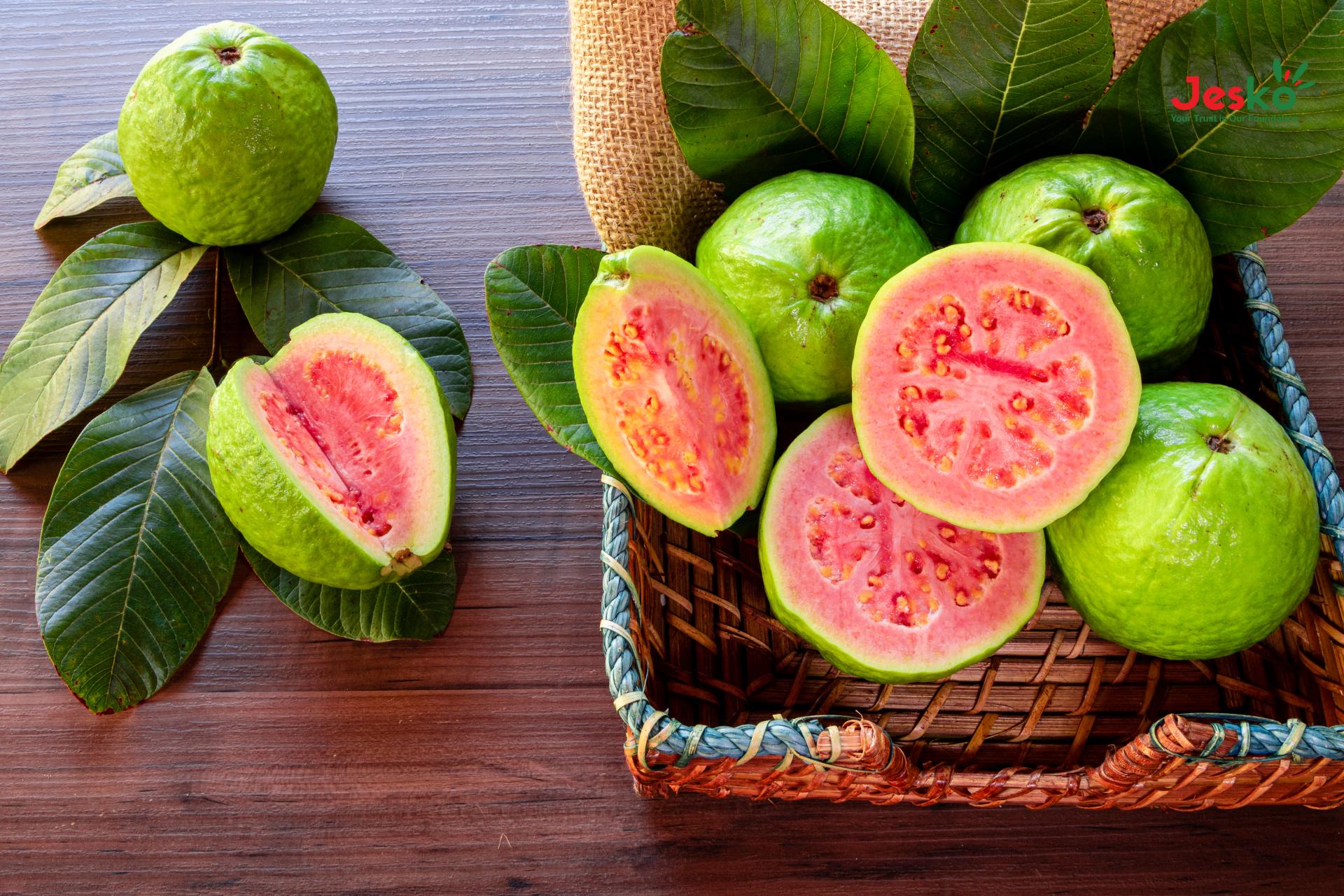
Cultivar Diversity and Sensory Profiles
Guava cultivars differ in flesh color, firmness, aroma intensity, and nutrient composition. These differences influence both consumer preference and intended product use.
Cultivar / Type | Appearance (Flesh & Skin) | Texture & Flavor | Typical Use | Key Nutritional / Functional Feature |
White-Fleshed Guava | Green–yellow skin; white flesh | Light aroma, firm, mildly sweet | Fresh consumption, slicing | Highest Vitamin C concentration, strong antioxidant support |
Pink / Red-Fleshed Guava | Green–yellow skin; pink to red flesh | Juicier, more fragrant, sweeter | Smoothies, juices, wellness beverages | Higher Lycopene and β-Carotene, supports oxidative balance and skin health |
Large Crisp / Thai Guava | Light green skin; very firm, low seeds | Clean flavor, high crunch | Fresh retail & export | High dietary fiber density, supports digestive regularity and satiety |
Yellow / Golden Guava | Golden skin; cream to light-pink flesh | Softer, tropically sweet aroma | Puree, jams, beverage bases | High pulp yield, ideal for processing formulations |
Interpretation:
• White-fleshed: Antioxidant strength
• Pink/red-fleshed: Carotenoid support for skin & vascular balance
• Large crisp: Digestive & satiety support via fiber
• Yellow: High efficiency for juice and puree production
Phytochemical Composition
Guava contains a diverse range of bioactive compounds relevant to health outcomes:
Compound Class | Key Molecules | Major Location | Functional Role |
Vitamin C (Ascorbic acid) | — | Pulp | Neutralizes ROS; supports immune cell function [1,8] |
Flavonoids | Quercetin, Kaempferol | Leaves & Peel | Enzyme modulation & metabolic regulation [6,12] |
Phenolic Acids | Gallic acid, Ellagic acid | Pulp & Peel | Anti-inflammatory & cytoprotective activity [9] |
Carotenoids | Lycopene, β-carotene | Red-fleshed pulp | Protects membrane lipids & ocular tissues [10] |
Pectin (Soluble fiber) | — | Fruit pulp | Promotes SCFA production & gut barrier health [9] |
Mechanisms of Action — Evidence-Based Biological Pathways
Mechanism | Biological Effect | Key Bioactive Components | Physiological Outcome | References |
1. Antioxidant & Anti-Inflammatory Defense | ↑ Endogenous antioxidant enzymes (SOD, CAT, GPx) and ↓ inflammatory mediators (TNF-α, NF-κB) | Vitamin C, phenolic acids, flavonoids | Reduces oxidative stress and supports cellular protection | [8,9] |
2. Digestive & Microbiome Support | Fermentation of pectin → ↑ SCFAs (especially butyrate) | Soluble dietary fiber (pectin) | Enhances gut barrier integrity, modulates mucosal immune tone, suppresses pathogenic bacteria | [9] |
3. Metabolic & Glycemic Regulation | Inhibition of α-glucosidase → slower carbohydrate absorption; modulation of PPAR-γ → improved lipid & insulin signaling | Quercetin, flavonoids (leaf-derived) | 15–28% reduction in post-meal glucose without hypoglycemia risk; improved metabolic balance | [6,12,13] |
4. Cardiovascular Support | ↓ Lipid peroxidation of LDL; ↑ nitric oxide bioavailability; electrolyte homeostasis | Potassium, catechins, phenolics | Helps regulate blood pressure, maintain vascular elasticity, and support heart health | [4,9,10] |
Key Bioactive Components by Plant Part
Plant Part | Dominant Compounds | Functional Significance | Recommended Use |
Fruit Pulp | Vitamin C, phenolics, pectin | Antioxidant, immune, digestive health | Safe for daily consumption |
Peel | High polyphenols & carotenoids | Strong antioxidant potential | Often included naturally when fruit is eaten whole |
Seeds | Insoluble fiber & sterols | Gut motility & satiety | Safe when consumed in fruit |
Leaves | Quercetin & ellagitannins | Modulates postprandial glucose and gut inflammatory tone | Short-term / periodic use only |
Note
Guava is a naturally safe fruit suitable for routine consumption as part of a balanced diet.
Research supports the following guidance:
Plant Part | Usage Context | Scientific Interpretation | Suitability |
Ripe Fruit Pulp | Fresh eating, beverages, puree | High vitamin C, phenolics, and fiber support daily wellness | Suitable for everyday consumption |
Seeds (within fruit) | Naturally ingested | Provide additional dietary fiber and plant sterols | Safe when consumed naturally |
Leaves (Tea / Extracts) | Short-term metabolic or digestive support | Demonstrated α-glucosidase inhibition and modulatory effects on gut mucosal inflammation [6,12,13] | Suitable for intermittent, not continuous long-term use |
Whole Fruit with Peel | Eaten fresh or lightly processed | Peel contains higher polyphenol density and contributes to antioxidant capacity [5,9] | Beneficial when palatability allows |
Post-Harvest Handling & Export Integrity
Jesko guava is:
Each lot is:
Ensuring quality, flavor, and appearance are consistent on arrival.
References