Loading...
Loading...
Loading...
Loading...

Loading...
From Vietnam’s Tropical Orchards to Global Wellness
Jesko connects the tropical heart of Viet Nam with global buyers through stable, on-spec fruit supply.
Our papayas come from controlled farms in the Mekong Delta and southern highlands, where warm sunlight and mineral-rich soils shape the fruit’s clean sweetness and golden color.
Every shipment matches approved specifications in size, maturity, packaging, and labeling ensuring sample-to-shipment consistency under FOB and CIF terms.
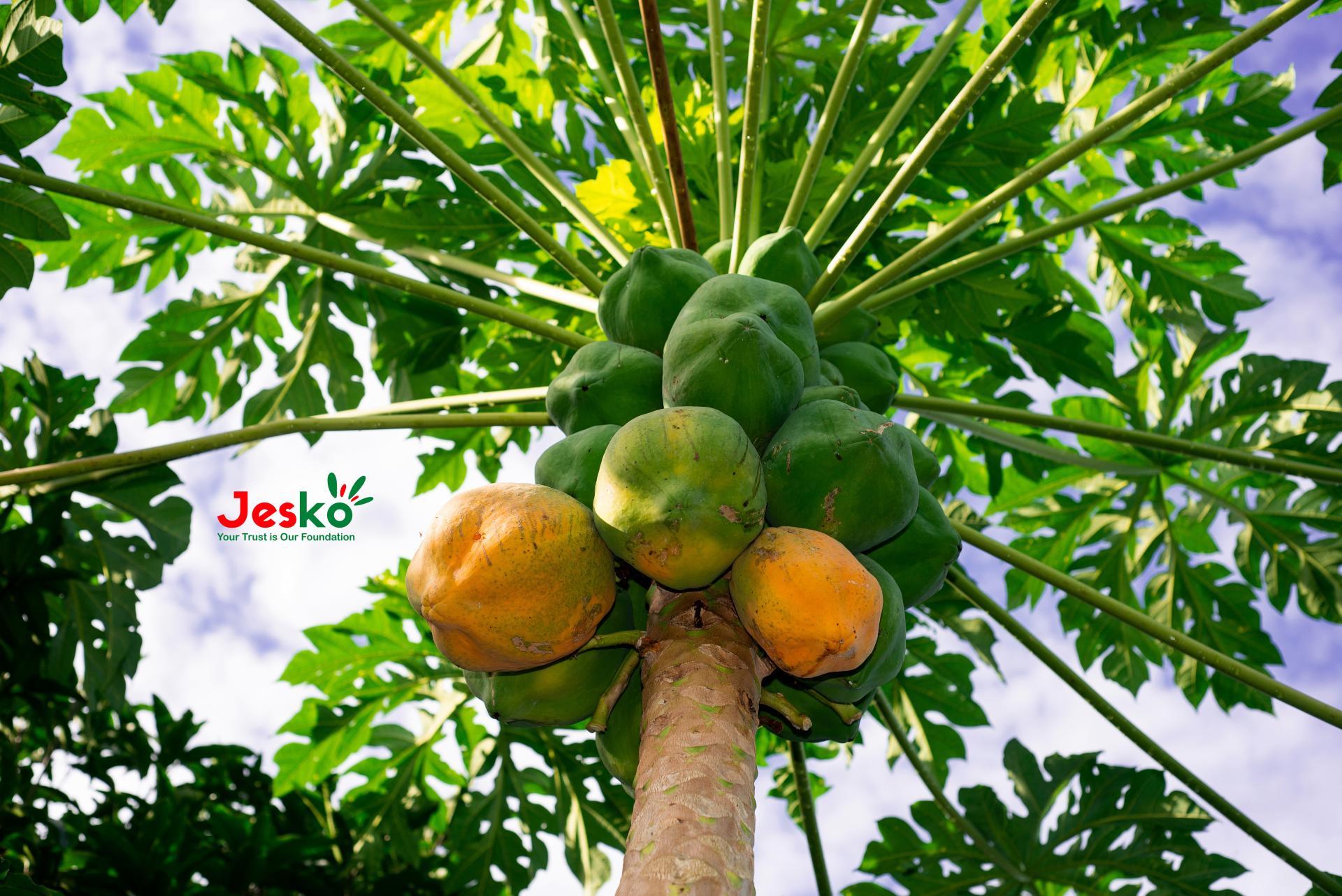
Papaya trees growing under tropical sun, the source of fresh, nutrient-rich fruit.
The Fruit of Life — Inside Carica papaya L.
Papaya (Carica papayaLinn.) is more than a fruit, it’s a functional food recognized for its enzymes, antioxidants, and therapeutic potential.
Across tropical Asia and Latin America, papaya has been valued for centuries as a natural digestive, detoxifier, and healing fruit.
Modern research now confirms its pharmacological functions, validating what traditional knowledge long suggested.
Nutritional Profile (per 100 g edible portion)
Component | Amount | Key Benefit |
Energy | 163 kJ (≈39 kcal) | Low-calorie, hydrating |
Water | 89 g | Natural hydration |
Carbohydrates | 7.2 g | Natural sugars for energy |
Fiber | 0.8 g | Digestive balance |
Vitamin C | 56.1 mg | Antioxidant, immune defense |
Vitamin A (β-carotene) | 1,094 IU | Eye and skin health |
Vitamin E | 0.73 mg | Anti-aging support |
Potassium | 182 mg | Heart function & pressure balance |
Magnesium | 10 mg | Cellular energy & muscle health |
Calcium | 17 mg | Bone structure & metabolism |
Papaya is naturally low in fat and sodium but high in antioxidants, fiber, and enzymes, a rare combination that supports multiple body systems.
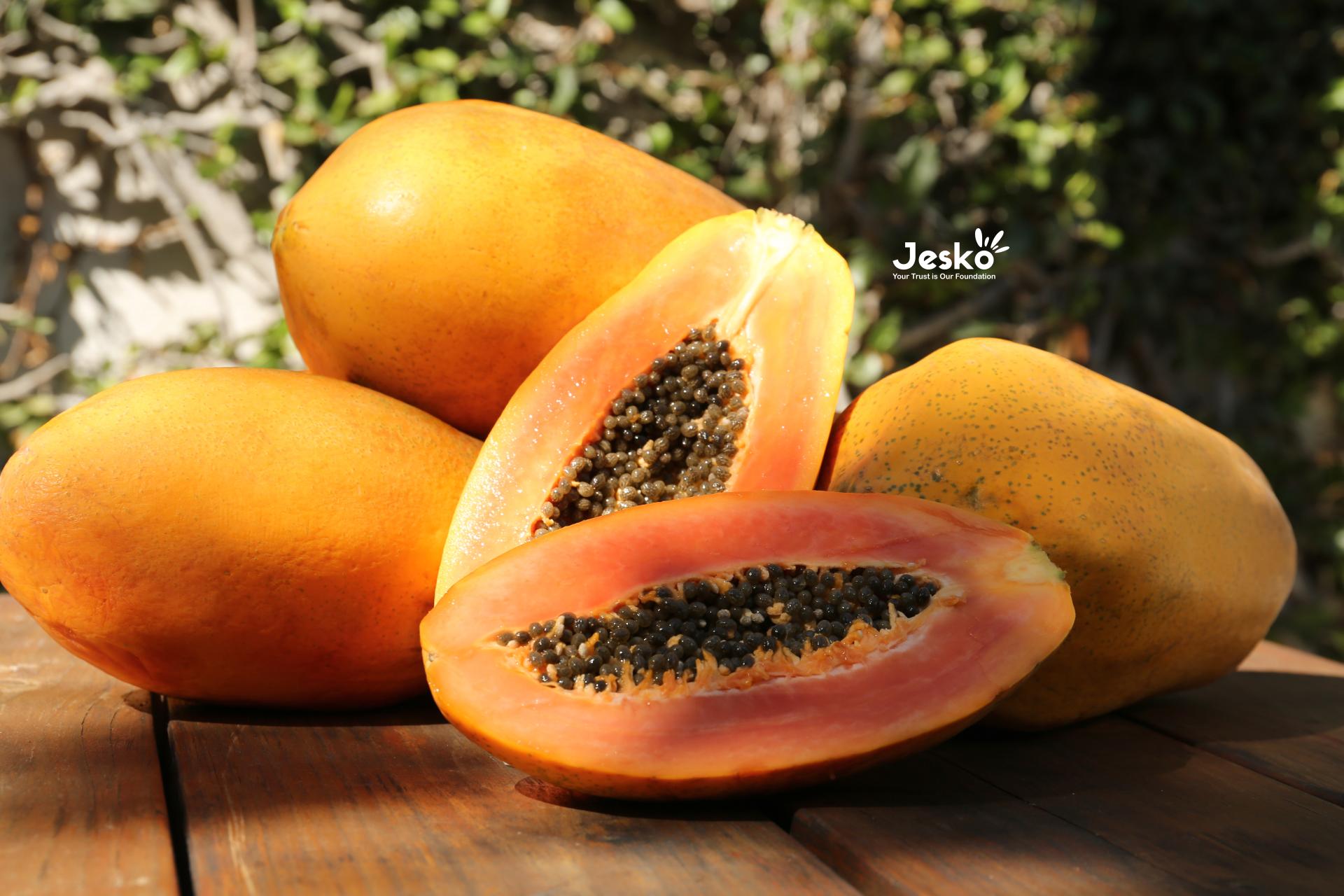
Ripe Papaya fruit - golden flesh, clean sweetness, and natural vitality.
Key Bioactive Compounds
Papaya’s health effects come from its diverse phytochemical profile, each part of the plant plays a role:
Part | Main Components | Functional Role |
Fruit | β-carotene, vitamin C, carpaine alkaloid | Antioxidant, heart health |
Latex (unripe fruit) | Papain, chymopapain | Digestive enzyme, wound healing |
Leaves | Flavonoids, alkaloids, phenolics | Anti-inflammatory, immune modulator |
Seeds | Benzyl isothiocyanate, papaya oil | Antimicrobial, detoxifying |
Roots & bark | Carposide, β-sitosterol | Antifungal, diuretic |
Flowers | Polyphenols, amino acids | Fever relief, respiratory support |
7. Anti-Inflammatory and Anti-Ulcer Effects
Leaf extracts reduce inflammation and protect stomach mucosa, comparable to omeprazole’s gastroprotective activity [8].
Health Function | Scientific Findings | Key Mechanisms / Compounds | Reference |
Antioxidant Defense | Papaya extracts enhance the body’s natural antioxidant enzymes (GPx, SOD, GST, G6PD), helping protect cells from oxidative stress. Supports healthy aging and immune balance. | Enzymes: GPx, SOD, GST, G6PD | [1] |
Cardiovascular Support | High vitamin C, β-carotene, and potassium lower LDL oxidation, stabilize blood pressure, and protect vessel walls. Studies show mild antihypertensive effects comparable to vasodilator drugs. | Vitamin C, β-carotene, potassium | [2], [3] |
Wound Healing & Skin Repair | Aqueous leaf extracts accelerate wound closure by ≈ 77 % in diabetic models. Papain and chymopapain remove necrotic tissue and stimulate collagen formation. | Papain, chymopapain enzymes | [4] |
Liver & Metabolic Health | Leaf and seed extracts protect liver cells from toxin-induced stress by lowering SGOT, SGPT, and bilirubin levels. The low glycemic index supports blood-sugar control. | Phytochemicals, antioxidants, low GI | [5] |
Antimicrobial & Antifungal Action | Seed extracts inhibit E. coli, Staphylococcus aureus, and Candida albicans. Benzyl isothiocyanate shows strong antimicrobial potential. | Benzyl isothiocyanate, papaya oil | [6] |
Anti-Tumor & Immune Support | Water extracts of papaya leaves suppress growth of cancer cell lines (HeLa, MCF-7, HepG2) and enhance lymphocyte activity and nitric oxide production. | Polyphenols, alkaloids, immune modulators | [7] |
Anti-Inflammatory & Anti-Ulcer Effects | Leaf extracts reduce inflammation and protect the gastric mucosa, with efficacy comparable to omeprazole in ulcer models. | Flavonoids, phenolic antioxidants | [8] |
Notes
Papaya is safe for everyday consumption when ripe.
However, the latex from unripe papaya contains papain and chymopapain, which may stimulate uterine contractions.
Pregnant women are advised to avoid unripe papaya or its latex extracts [9].
Harvested with Precision, Delivered with Care
Jesko papayas are harvested at 50–80% ripeness, quickly pre-cooled, and packed in ventilated cartons for export under strict cold-chain control.
Each batch includes traceable origin codes, consistent grading, and standardized labeling to ensure quality and integrity at destination.
From Nutrition to Evidence
Papaya embodies the Jesko philosophy, connecting tropical flavor with measurable science.
From Vietnam’s fertile soils to the world’s produce shelves, Jesko papayas represent a harmony of natural sweetness, nutritional value, and proven function.
References
[1] Aravind, G., Debjit, B., Duraivel, S., & Harish, G. (2013).
Traditional and medicinal uses of Carica papaya.
Journal of Medicinal Plants Studies, 1(1), 7–15.
[2] Costa de Morais, C. B., de Oliveira, L. G. S., & Souza, A. L. F. (2021).
Nutraceutical value of Carica papaya: A review.
International Journal of Phytomedicine, 13(1), 45–58.
[3] Marotta, F., Yoshida, C., Barreto, R., Naito, Y., & Packer, L. (2006).
Oxidative-inflammatory damage in cirrhosis: Effect of a fermented papaya preparation.
Annals of the New York Academy of Sciences, 1067(1), 311–316.
https://doi.org/10.1196/annals.1354.041
[4] Nakasone, H. Y., & Paull, R. E. (1998).
Tropical fruits.
Wallingford, UK: CABI Publishing.
[5] Otsuki, N., Dang, N. H., Kumagai, E., Kondo, A., Iwata, S., & Morimoto, C. (2010).
Aqueous extract of Carica papaya leaves exhibits anti-tumor activity and immunomodulatory effects.
Journal of Ethnopharmacology, 127(3), 760–767.
https://doi.org/10.1016/j.jep.2009.11.024
[6] Owoyele, B. V., Adebukola, O. M., Funmilayo, A. A., & Soladoye, A. O. (2008).
Anti-inflammatory activity of Carica papaya leaves.
Inflammopharmacology, 16(4), 168–173.
https://doi.org/10.1007/s10787-007-1610-7
[7] Panzarini, E., Dwikat, M., Mariano, S., Vergallo, C., & Dini, L. (2014).
Carica papaya as a functional food: Antioxidant and anti-inflammatory properties.
Evidence-Based Complementary and Alternative Medicine, 2014, Article ID 584521.
https://doi.org/10.1155/2014/584521
[8] Upadhyay, R. K. (2014).
Nutritional, therapeutic and pharmaceutical uses of papaya: A review.
International Journal of Green Pharmacy, 8(3), 155–169.
https://doi.org/10.4103/0973-8258.142668
[9] Vij, T., & Prashar, Y. (2015).
A review on medicinal properties of Carica papaya Linn.
Asian Pacific Journal of Tropical Disease, 5(1), 1–6.
https://doi.org/10.1016/S2222-1808(14)60617-4
[10] Vijayakumar, S., Govindarajan, R. K., & Nandhini, C. (2013).
Phytochemical screening and antimicrobial activity of Carica papaya leaf extracts.
Asian Pacific Journal of Tropical Biomedicine, 3(9), 720–724.
https://doi.org/10.1016/S2221-1691(13)60146-6
From Viet Nam to the World. Jesko — Your Trust is Our Foundation.