Loading...
Loading...
Loading...
Loading...

Loading...
From The Highlands of Viet Nam to Global Wellness
Jesko supplies premium Passion Fruit (Passiflora edulis) from carefully managed growing regions across the Central Highlands and tropical valleys of Vietnam.
Warm sunlight, fertile volcanic soils, and controlled irrigation shape a fruit known for its vivid aroma, bright color, and naturally balanced acidity.
Every shipment is matched to specification, maturity, Brix, acidity, size, packaging, and labeling: ensuring sample-to-shipment consistency under FOB and CIF terms.
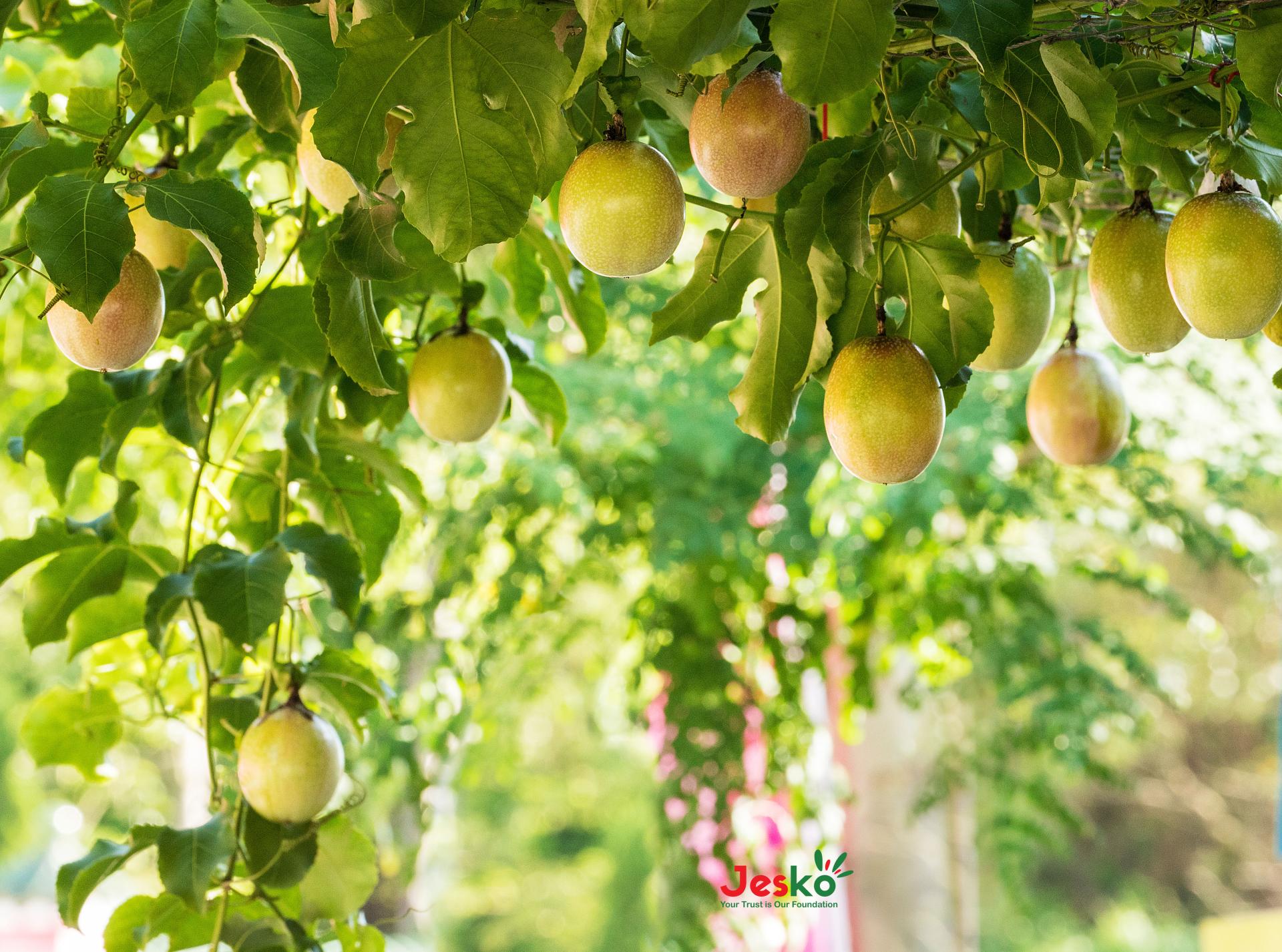
Passion fruit vines thriving under highland sunlight
The Fruit of Vitality — Inside Passiflora edulis
Passion fruit has been valued for generations as a refreshing, vitamin-rich fruit used in beverages, desserts, and traditional remedies.
Modern research confirms its identity as a functional food, naturally supporting:
Much of this value comes from its polyphenols, carotenoids, pectin fibers, and essential minerals.
Comparative Table of Passion Fruit Varieties
Variety / Species | Appearance (Shell & Pulp) | Flavor Profile | Typical Uses | Origin / Growing Notes |
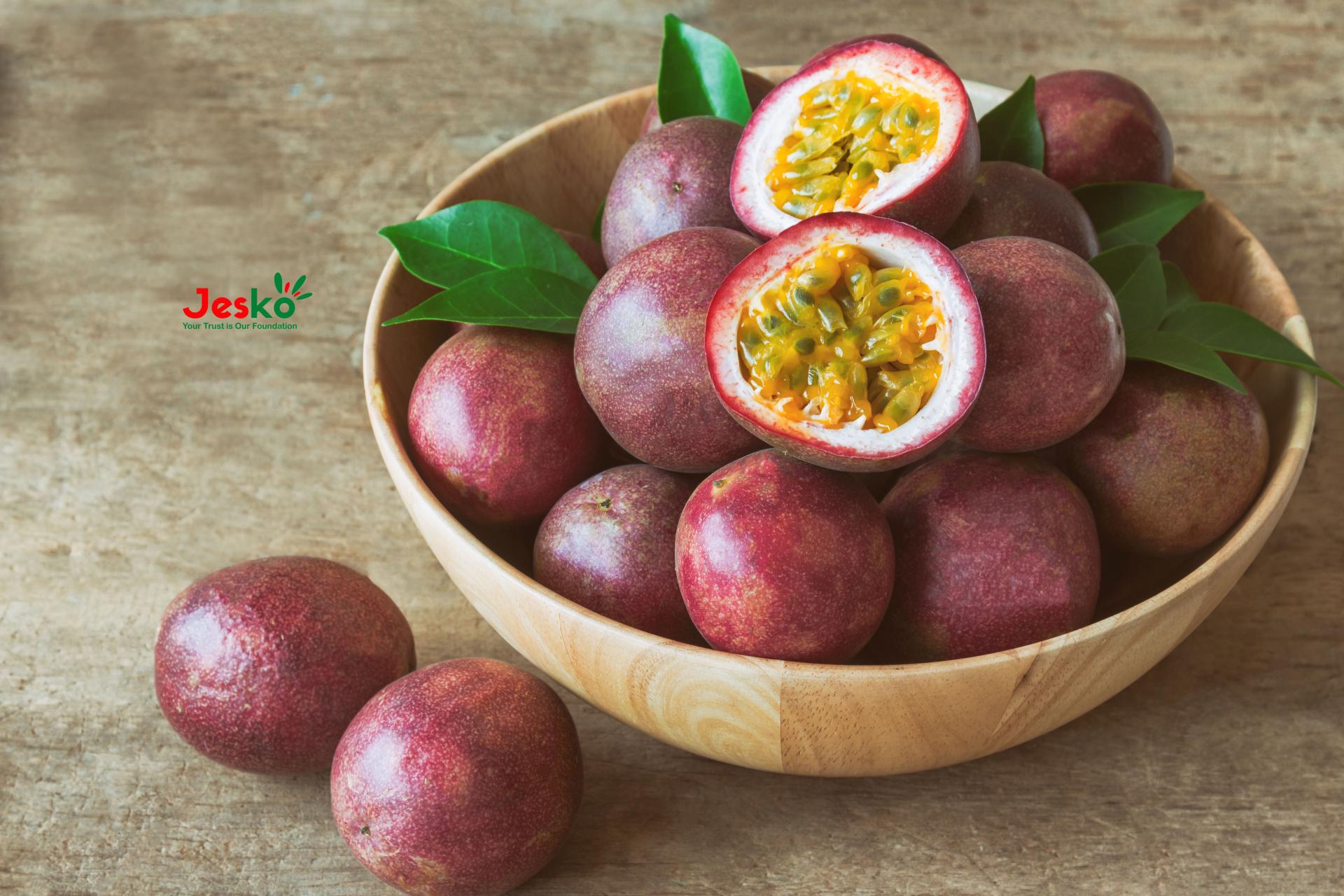
Purple Passion Fruit (Passiflora edulis) | Small to medium size, deep purple rind; pulp is bright golden-orange with numerous seeds. | Balanced sweet-tart flavor with strong tropical aroma. | Fresh consumption, beverages, premium juice, artisanal desserts. | Widely cultivated in highland regions with cool nights; fast fruiting; stable yield when trellised and irrigated consistently. |
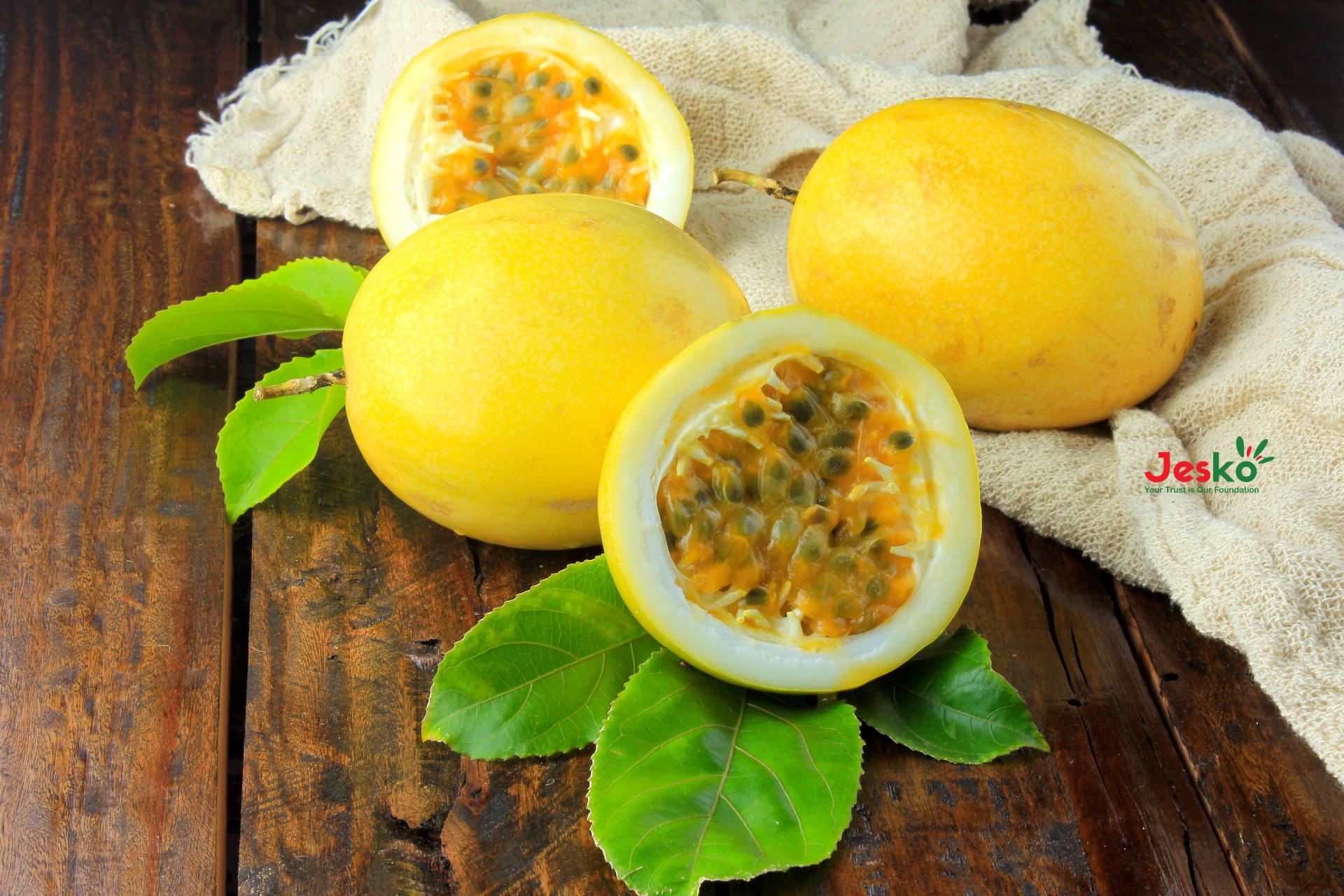
Yellow Passion Fruit (Passiflora edulis var. flavicarpa) | Larger than purple type; golden-yellow rind; pulp is juicy with high liquid content. | Sweeter and more floral, mild acidity; aromatic notes reminiscent of guava and banana. | Industrial juice & puree processing, smoothies, syrups. | Originated in South America; performs well in warm, humid lowland climates; vigorous vine growth and good productivity. |
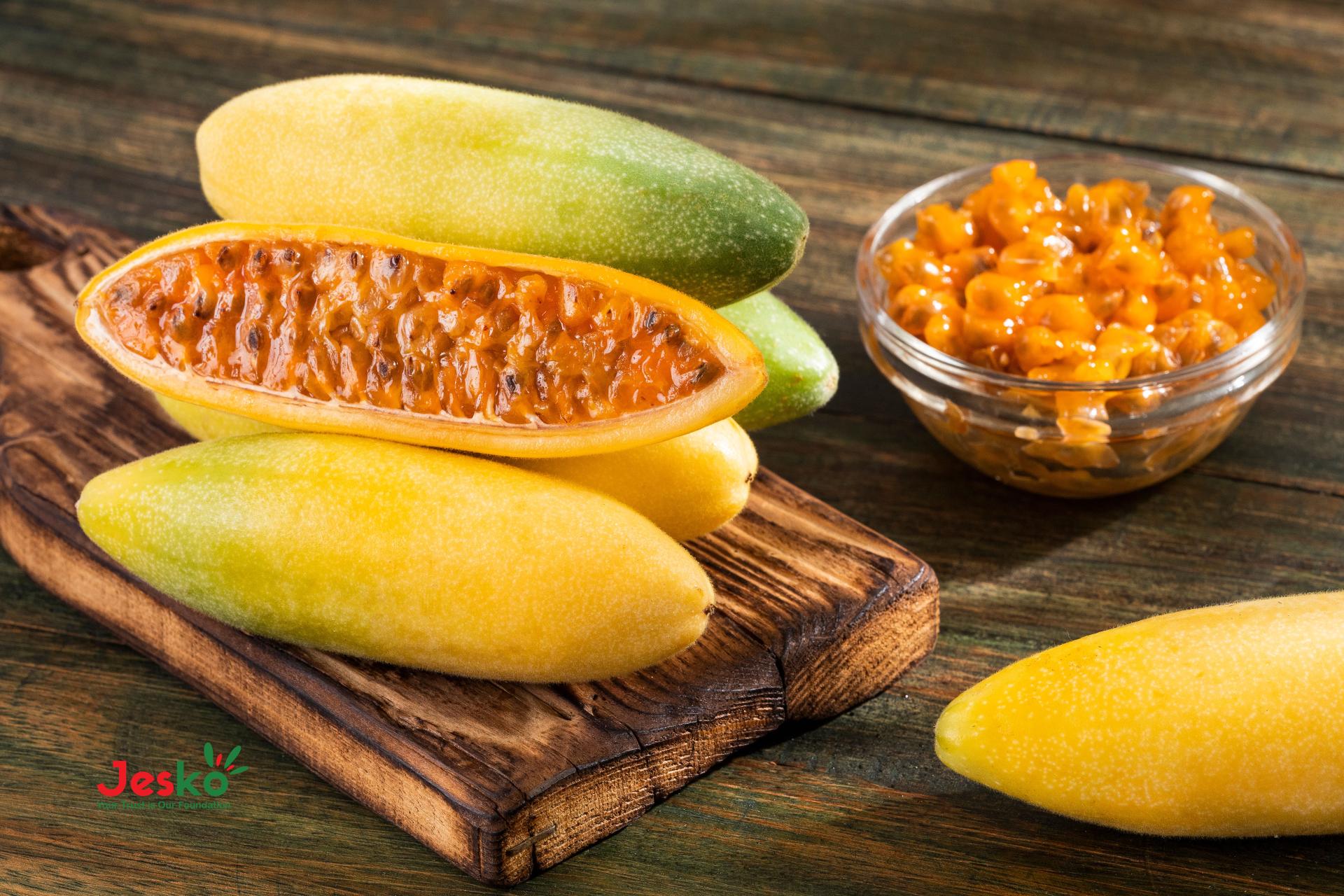
Banana Passion Fruit (Passiflora tripartita var. mollissima) | Elongated, banana-like shape; rind pinkish to yellow when ripe; pulp is soft and aromatic. | Fragrant, mildly sweet, less acidic than common passion fruit. | Home gardens, specialty fresh fruit markets, artisanal beverages. | Native to the Andes; prefers cooler elevations; valued for unique shape and aroma. |
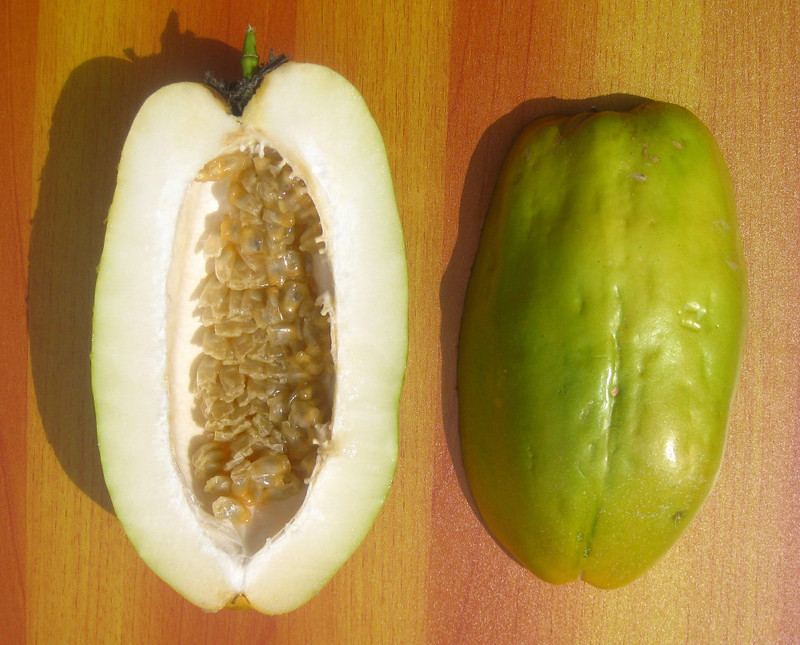
Giant Granadilla / Giant Passionfruit (Passiflora quadrangularis) | Very large fruits (can exceed 1 kg); rind green to yellow; pulp pale yellow to cream-colored. | Sweet and mild, not strongly acidic; subtle tropical fragrance. | Eating fresh, desserts, jams, and decorative culinary presentations. | Common in tropical South America; vines require strong support; fruits are harvested at full maturity for best flavor. |
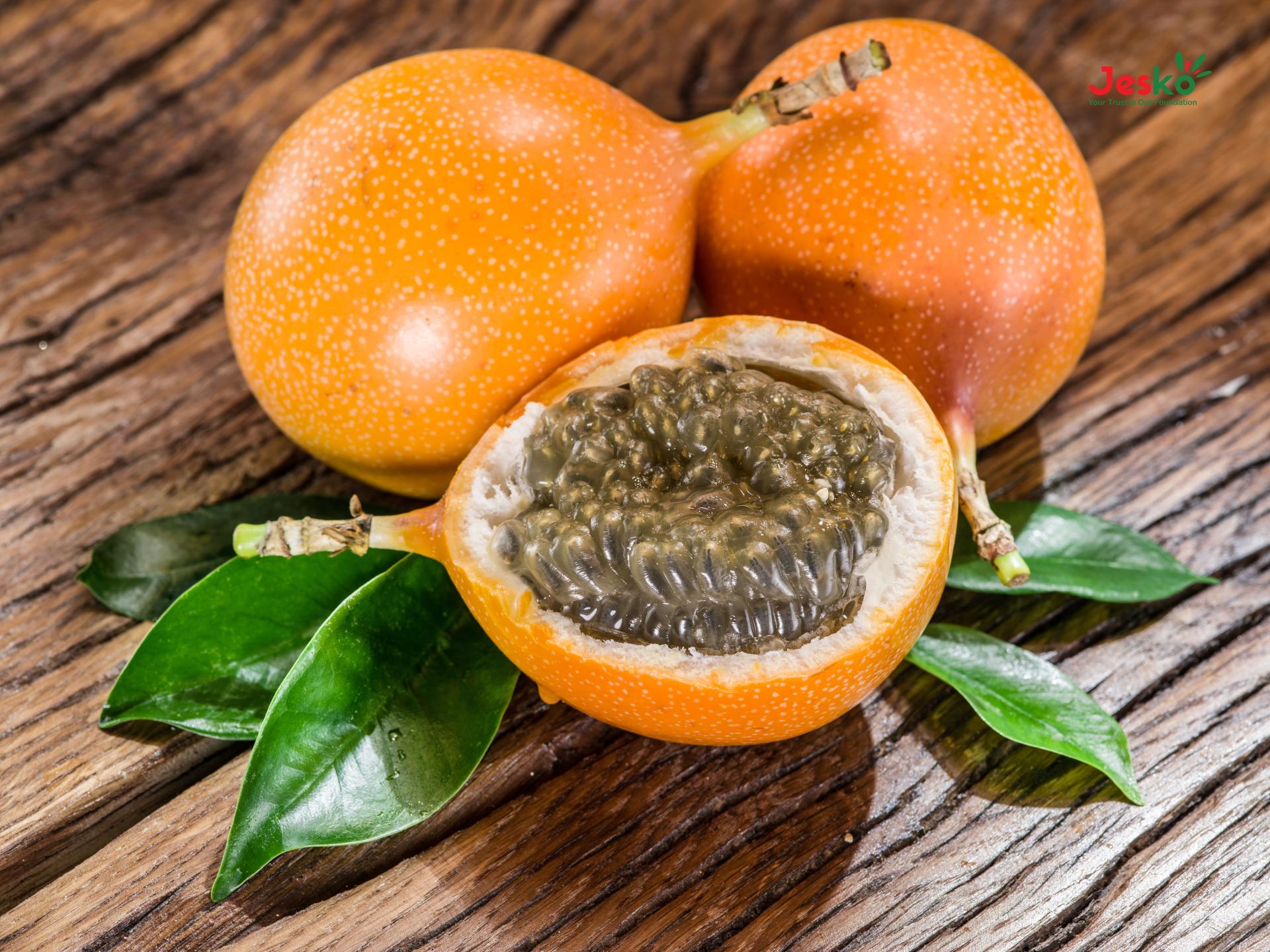
Sweet Granadilla (Passiflora ligularis) | Smooth orange-gold rind when ripe; pulp is clear to white with a delicate scent. | Naturally sweet, floral, slightly citrus-like; ready to drink directly with a straw. | Premium fresh fruit, wellness food, gift fruit markets. | Native to Colombia and Andean regions; prefers cooler highlands; valued for high eating quality and fragrance. |
Nutritional Profile (per 100 g edible portion)
Source: USDA FoodData Central (FDC ID: 09231)
Component | Amount | Physiological Role |
Energy | 97 kcal | Natural energy supply for daily metabolism |
Water | ~73 g | Maintains hydration and cellular function |
Carbohydrates | ~23 g | Primary metabolic fuel |
Dietary Fiber (soluble pectin) | ~10.4 g | Supports gut health and helps stabilize post-meal blood sugar |
Vitamin C | ~30 mg | Antioxidant activity and immune system support |
Vitamin B2 (Riboflavin) | ~0.10 mg | Cellular energy production (ATP synthesis) |
Vitamin B3 (Niacin) | ~1.5 mg | Metabolic regulation and enzyme cofactor support |
Potassium | ~348 mg | Helps maintain normal heart rhythm and blood pressure |
Iron | ~1.6 mg | Supports oxygen transport and hemoglobin formation |
Passion fruit is naturally high in vitamin C, potassium, fiber, and polyphenols, forming a nutritional profile supporting whole-body wellness.
Key Bioactive Components
Plant Part | Active Compounds | Functional Role |
Fruit Pulp | Vitamin C, carotenoids, polyphenols | Antioxidant, immune defense |
Seeds | Edible oils rich in linoleic acid | Skin nourishment & metabolism |
Peel (rind) | Soluble pectin & fiber | Blood sugar control, digestive health |
Leaves | Flavonoids, Passiflorin | Calming & sleep support |
Health Functions
Health Function | Scientific Findings | Key Compounds / Mechanisms | Reference |
Antioxidant Defense | Neutralizes free radicals and supports cellular resilience. | Vitamin C, carotenoids, flavonoids | [1] |
Cardiovascular Support | Potassium helps stabilize blood pressure and heart rhythm. | Potassium, polyphenols | [2] |
Digestive & Gut Microbiome Health | Soluble pectin supports microbiota and regulates glucose absorption. | Pectin fiber | [3], [4] |
Metabolic & Blood-Sugar Balance | Peel-derived pectin helps reduce post-meal glucose spikes. | Soluble fiber (pectin) | [3] |
Antimicrobial Protection | Seed extracts inhibit growth of E. coli, S. aureus, Candida spp. | Benzyl isothiocyanate, polyphenols | [5] |
Mood & Sleep Support | Leaf extracts act as natural mild sedatives and anxiolytics. | Flavonoids & harman alkaloids | [6] |
Varietal & Agricultural Notes
Passion fruit varieties are generally categorized into two naturally occurring forms:
Variety Type | Appearance & Flavor | Typical Use |
Purple Passion Fruit (Passiflora edulis) | Deep purple skin, strong aroma, bright sweet-acid balance | Fresh consumption, beverages |
Yellow Passion Fruit (Passiflora edulis var. flavicarpa) | Golden rind, tropical floral notes, higher juice content | Industrial juice & puree processing |
Both types are cultivated in Vietnam under:
Jesko harvests at 70–85% maturity, pre-cools immediately, and packs in ventilated cartons to maintain aroma, color, and Brix stability through transit.
From Nutrition to Application
Industry | Application | Why Passion Fruit Works |
Beverage | Juices, smoothies, NFC puree, teas | Stable aroma & natural acidity |
Foods | Yogurts, jams, confections | Vibrant flavor & color |
Nutraceutical | Pectin fiber extracts | Supports glucose & gut health |
Cosmetics | Cold-pressed seed oil | Skin barrier strengthening & hydration |
Passion fruit aligns with clean-label, plant-based, and functional wellness trends.
Notes on Safe Use
From Viet Nam to the World — Your Trust is Our Foundation.
Jesko ensures:
Passion fruit is more than flavor, it is function, wellness, and vitality, delivered with Jesko precision.
References
[1] Biswas, S., Dey, P., & Banerjee, A. (2021). Nutritional profiling and health-promoting benefits of Passiflora species. Journal of Food Biochemistry, 45(9), e13867.
[2] Joseph-Adekunle, D. (2019). Organic acids and flavor chemistry of Passiflora edulis juice. Journal of Food Chemistry, 278, 191–197.
[3] Da Silva, L. M., et al. (2014). Effects of passion fruit peel flour on glycemic response. Food Research International, 55, 252–258.
[4] Lewis, S., et al. (2013). Dietary pectin and its metabolic effects. Nutrition & Metabolism, 10(1), 52–61.
[5] Vijayakumar, S., et al. (2013). Antimicrobial activity of Passiflora leaf and seed extracts. Asian Pacific Journal of Tropical Biomedicine, 3(9), 720–724.
[6] Ansori, A. N., et al. (2020). Passiflora edulis as a potential source of anxiolytic phytochemicals. Journal of Biological & Pharmaceutical Sciences, 8(4), 12–21.